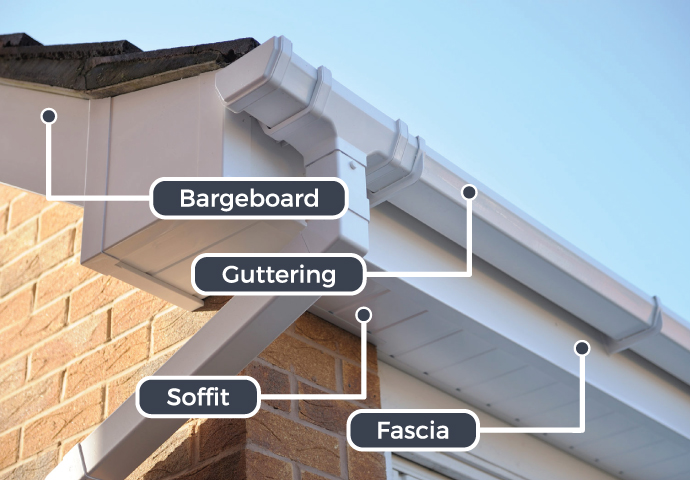
When it comes to the exterior of a house, there are numerous components that work together to provide both functionality and aesthetic appeal. Among these are fascias and soffits, two essential elements often mistaken for one another. While they both contribute to the overall appearance and structural integrity of a building, fascias and soffits serve distinct purposes. Understanding the difference between these components is crucial for homeowners looking to maintain and improve their properties effectively.
Fascias
The fascia is the vertical band that runs along the edge of the roof, where it meets the outer walls of the house. It is typically a long, straight board that is installed horizontally and positioned directly beneath the roofline. Fascias serve several important functions:
- Support for Guttering: One of the primary roles of fascias is to provide support for guttering. Gutters are typically attached to the fascia board, allowing them to collect rainwater runoff from the roof and channel it away from the house. The fascia provides stability and strength to the guttering system, helping to ensure proper drainage and prevent water damage to the building’s exterior.
- Protection for Roof Edges: Fascias also protect the edges of the roof from exposure to the elements. They help to seal the gap between the roof and the walls of the house, preventing moisture from seeping into the building and causing damage. Additionally, fascias can help to improve the appearance of the roofline by providing a clean, finished look.
- Attachment Point for Soffits: In many cases, the soffit is attached to the underside of the fascia board. This creates a cohesive transition between the roof and the walls of the house, while also providing additional protection and insulation for the building’s interior.
Soffits
The soffit is the horizontal surface that runs underneath the overhanging section of the roof eaves. It is located between the exterior wall of the house and the fascia board, forming a ceiling for the underside of the roof. Soffits serve several important functions:
- Ventilation: Soffits often contain small vents that allow air to circulate in the roof space. This helps to prevent moisture buildup and reduce the risk of mold, mildew, and rot. Proper ventilation is essential for maintaining a healthy and efficient roofing system.
- Protection for Rafters: Soffits provide protection for the rafters and other structural components of the roof. By covering the underside of the roof eaves, soffits help to shield these elements from exposure to the elements, including rain, wind, and sunlight.
- Aesthetic Enhancement: Soffits can also enhance the appearance of the exterior of a house. They provide a clean, finished look to the underside of the roof eaves, helping to improve the overall curb appeal of the property.
In summary, while fascias and soffits are both essential components of a house’s exterior, they serve distinct purposes. Fascias provide support for guttering, protect the edges of the roof, and serve as an attachment point for soffits. Soffits, on the other hand, provide ventilation for the roof space, protection for the rafters, and contribute to the aesthetic appeal of the building. Understanding the roles and differences between fascias and soffits is key to maintaining and enhancing the functionality and appearance of a home.