
House Repointing in Stoke-on-Trent: Signs, Costs and What’s Involved
TL;DR
Repointing is the process of removing old, damaged mortar from the joints between bricks and replacing it with fresh mortar. Most houses in Stoke-on-Trent will need repointing at some point. The mortar degrades faster than the bricks themselves, and once it starts to fail, water gets in. Catching it early is cheaper than dealing with the damp problems that follow if you leave it.
What is repointing and why do UK homes need it?
Brickwork is not one solid material. It is bricks held together with mortar joints, and those joints are the weaker part of the equation. Mortar is softer than brick and wears down over time, particularly on exposed elevations that take the full force of wind and rain.
In a place like Stoke-on-Trent, the climate does not help. Wet winters mean the mortar absorbs moisture repeatedly throughout the year. When temperatures drop, that moisture freezes and expands inside the joint. Over many cycles, the mortar breaks down from the inside out, becoming soft, recessed or crumbly. Once that process is underway, water can track behind the brickwork rather than running off the face of the wall.
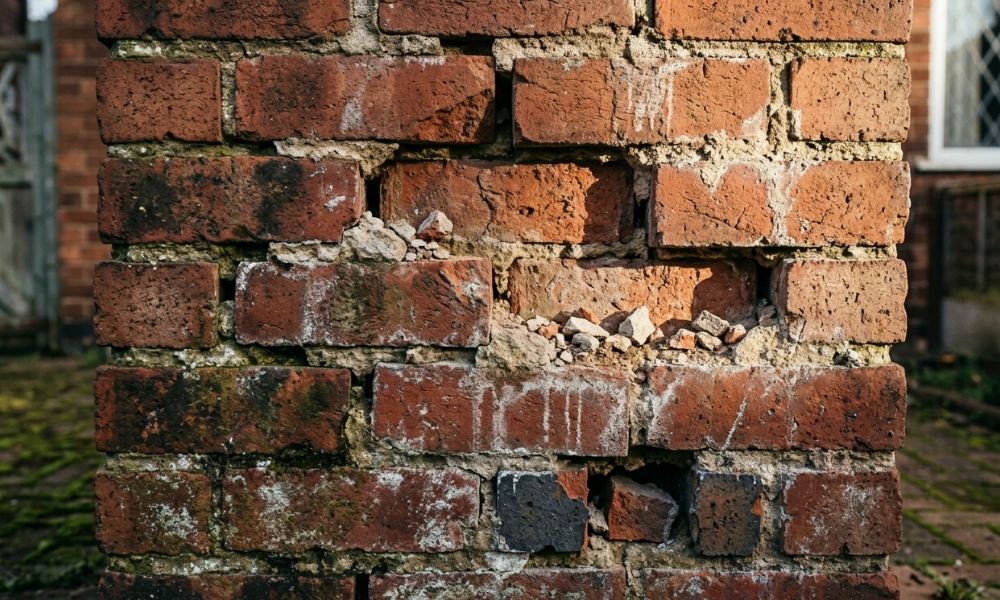
Repointing replaces the damaged mortar before the damage spreads. It is standard maintenance on any older brick property, not a sign that something has gone seriously wrong.
Signs your brickwork needs repointing
Most of the signs are visible from the ground if you know what to look for:
- Mortar joints that look recessed or hollow compared to the brick face
- Crumbling or powdery mortar that comes away easily when pressed
- Cracks running along the mortar lines rather than through the bricks
- White salt deposits on the brickwork face, which indicate water movement through the wall
- Damp patches on internal walls, particularly after heavy rain
- Moss or plant growth taking hold in the joints
The key distinction is between mortar damage and structural cracking. Repointing addresses failed mortar joints. Diagonal cracks running through bricks, or cracks that are wide and irregular, can indicate movement in the structure and need a different assessment. If you are not sure which you are looking at, we can check during a free visit.
The repointing process
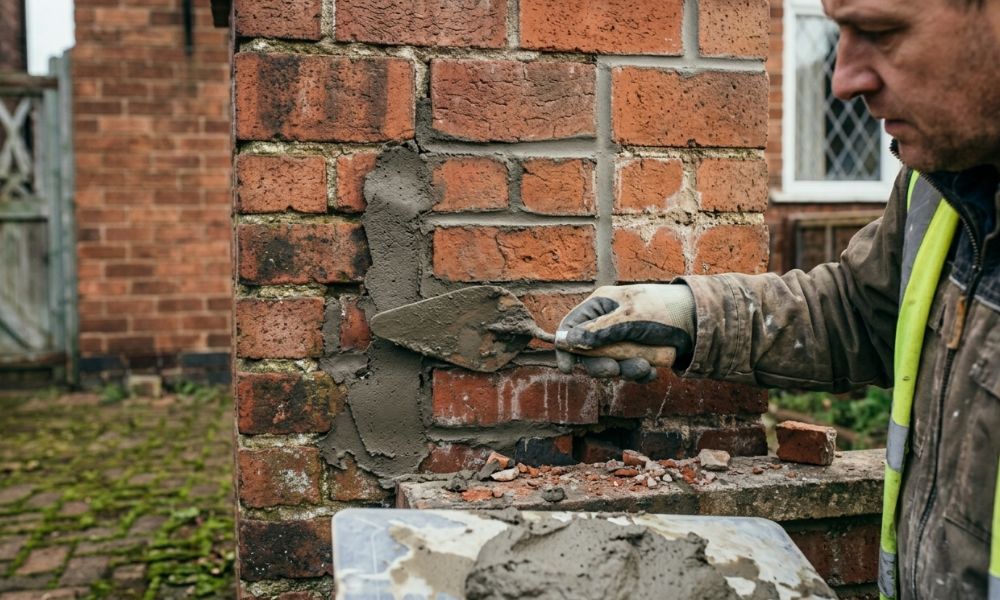
The job breaks down into two stages: removing the old mortar and applying the new.
Old mortar is cut back to a depth of around 15 to 20mm using an angle grinder or plugging chisel. This has to be done carefully. Cutting too shallow means the new mortar has nothing to grip. Cutting too aggressively risks chipping the brick faces, which is both unsightly and harder to fix than the original problem.
Once the joints are cleared and cleaned out, fresh mortar is applied in sections. The mortar is pressed firmly into the joint and finished to match the profile of the original pointing. Common profiles are weatherstruck, flush and bucket handle. The right choice depends on the age and style of the property.
For Victorian and Edwardian properties, which are common in areas like Hanley, Shelton and Stoke town itself, the mortar specification matters. Old soft bricks were built with lime mortar, which is flexible and allows moisture to escape through the joints. Repointing these properties with a hard cement mortar traps moisture in the wall instead and can cause the brick faces to spall. We use the correct lime-based mix for older properties.
After repointing, the new mortar needs time to cure properly before it gets wet. We advise on timing and aftercare once the work is complete.
How long does repointing last?
Done properly with the right mortar mix, repointing should last 20 to 30 years on a well-sheltered elevation. More exposed faces, such as a front wall that takes prevailing wind and rain, may show wear sooner. Chimneys tend to deteriorate faster than any other part of the building because they are exposed on all four sides with no shelter at all.
The quality of the original pointing also affects longevity. Repointing that was done quickly with a hard cement mix on an older property often fails within ten years. When we come to re-do it, we remove the incompatible mortar and replace it with the correct specification.
How much does house repointing cost in Stoke-on-Trent?
Repointing is typically priced per square metre, though for smaller jobs a fixed day rate is more common. As a rough guide:
- Partial repoint of one elevation on a terrace or semi: £300 to £600
- Full repoint of a semi-detached property: £800 to £1,500
- Full repoint of a detached house: £1,200 to £2,500 or more depending on size
Scaffolding adds to the cost on two-storey properties or jobs where ladders are not sufficient for safe access. We include any scaffolding requirement in the written quote so you have a complete figure before we start.
Chimney repointing is usually quoted separately as a standalone job. If roof repairs are happening at the same time and scaffolding is already going up, we can combine the two visits to keep the overall cost down.
We offer free no-obligation quotes for all repointing work across Stoke-on-Trent, Newcastle-under-Lyme, Congleton and the surrounding areas. Call us on 07351 639478 or get in touch here to arrange a visit.
Find out more on our house repointing service page.
-
How do I know if my house needs repointing?
Look for mortar joints that appear recessed or hollow, crumbling material that comes away when pressed, or white salt deposits on the brickwork face. Damp patches on internal walls after heavy rain are another sign. If you are not sure, we can assess the brickwork during a free visit and let you know whether repointing is needed and how much of the wall is affected.
-
What is the difference between repointing and rendering?
Repointing replaces the mortar in the joints between bricks while leaving the brick faces exposed. Rendering covers the entire wall surface with a layer of mortar or plaster. They solve different problems. Repointing is used when the joints have failed but the brickwork itself is sound. Rendering is typically used to waterproof a wall or change its appearance. Some homeowners choose rendering as an alternative to repeated repointing, but it is a bigger job and changes the look of the property permanently.
-
Do you use lime mortar or cement mortar for repointing?
It depends on the property. Victorian and Edwardian houses were built with soft bricks and lime mortar. Repointing them with hard cement traps moisture in the wall and can cause the brick faces to crack and spall over time. For older properties we use a lime-based mix that is appropriate for the original construction. For post-war properties built with harder modern bricks, a sand and cement mortar is typically suitable. We assess the property before starting and use the right specification for the age and condition of the brickwork.
-
How long does repointing take to dry?
Fresh mortar is typically firm within 24 hours but takes around 28 days to fully cure. During that period it is best to avoid pressure washing the repointed areas. Lime mortar cures more slowly than cement and can be more sensitive to very cold or very dry conditions in the days immediately after application. We advise on aftercare when we complete the work.
-
Do you carry out chimney repointing as well as house repointing?
Yes. Chimney stacks are one of the most exposed parts of any property and the mortar around the joints and flaunching often fails well before the rest of the brickwork. We carry out chimney repointing as a standalone job or alongside other roof work. If scaffolding is already going up for roof repairs, combining the chimney repoint at the same time keeps the overall cost down.